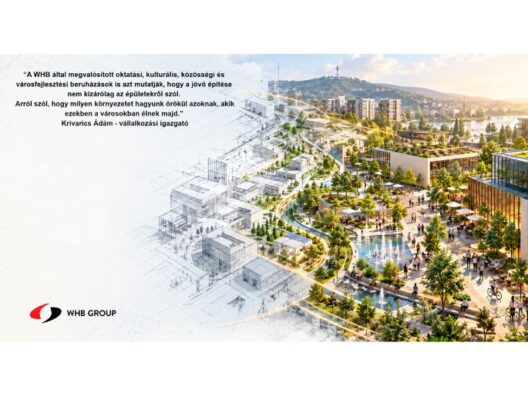
A new building always transforms its surroundings to some extent. It influences the urban landscape, mobility, community life and economic activity, as well as the everyday lives of the people who use it or simply pass by it each day.
Building the city of the future therefore cannot be limited to individual sites and buildings. Developments must be considered within a broader spatial, social and economic context.
A project may be technically flawless, but its true value only becomes apparent through use. It is then that we see whether the building effectively supports the activities taking place within it, integrates well with its surroundings and can be operated sustainably over the long term.
Liveability is more than a single technical parameter
When discussing the city of the future, attention often focuses on impressive technological solutions. Yet liveability is not determined by a single digital system or energy performance indicator.
It requires well-designed and functional public spaces, accessible institutions, efficient transport connections and buildings that respond to the real needs of their users.
A school, hospital, sports facility, cultural institution or innovation centre does more than fulfil a specific function. It can also strengthen communities, stimulate economic activity and contribute to regional development.
The contractor’s primary responsibility is to deliver the design to the highest possible standard, but this also requires an understanding of the long-term purpose the development is intended to serve.
The old and the new city coexist
The city of the future is not being built on a blank canvas. New functions must be integrated among existing buildings, historic urban districts, established transport networks and local communities.
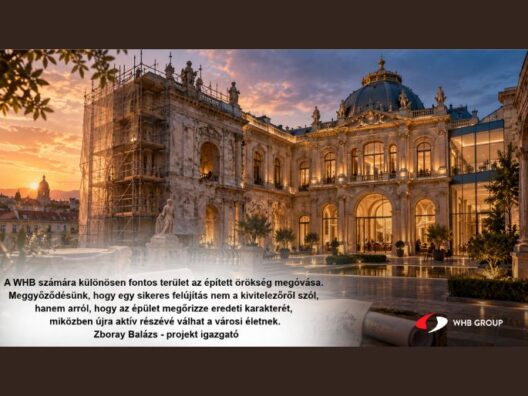
This makes the balance between preservation and modernization particularly important. The renewal of a historic building can be just as much a part of building the city of the future as the development of a new technological, educational or industrial facility.
WHB’s corporate approach brings together the preservation of architectural heritage, the shaping of the urban landscape of the future, and the delivery of modern facilities designed to be durable and sustainable. This dual perspective demonstrates that urban development cannot be measured solely by the number of new buildings constructed. Reinterpreting existing assets and giving them renewed purpose is equally important.
The city is also social infrastructure
The built environment directly influences how we learn, work, travel, exercise and interact with one another. A well-executed development can therefore create not only real estate value, but social value as well.
WHB’s projects can be viewed not only in terms of their scale or technical complexity, but also through the role they play in the life of a city, a region or the local community.
Responsibility towards future generations
A building may be completed within a few years, but ideally it will serve its users for decades. During that time, technological possibilities, energy prices, mobility patterns and the functional requirements of a particular area may all change.
The buildings of the future should therefore not only respond to the expectations of today, but also provide the flexibility required to adapt to future needs. Durability must go hand in hand with adaptability, aesthetics with functionality, and initial investment costs with a life-cycle perspective.
“A building can be completed within a few years, but its impact remains with us for decades. This is why every development requires us to look beyond technical handover. We must also consider how the building integrates with its surroundings, what quality of life it helps create and what kind of value it leaves for future generations.”
Ádám Krivarics, Business Development Director