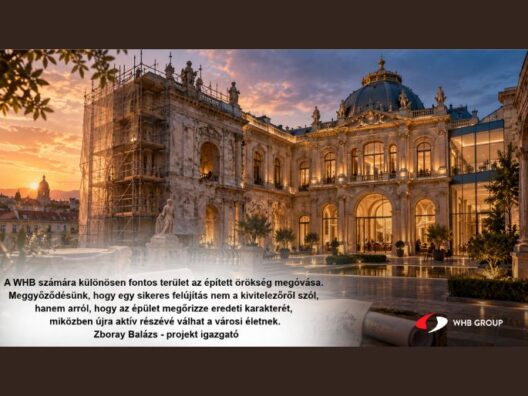
A historic building renovation creates a unique dialogue between past and present. The contractor works simultaneously with the legacy of an earlier era and the expectations of today’s users. The challenge is to preserve what is irreplaceable while ensuring that the building can once again become a vibrant, functional and sustainable part of its surroundings for generations to come.
This requires a different approach from constructing a new building. In a heritage environment, no two situations are exactly alike, and even with the most thorough preparation, structures, details or conditions may be uncovered that require new professional decisions to be made.
Managing the unknown
In new construction, the objective is to implement a predefined design. In the case of a historic building, however, the building itself may continuously reveal new information.
Traces of previous alterations, the condition of concealed structures, original materials or an unexpectedly uncovered detail can all influence the next stages of the work. Successful delivery therefore requires meticulous preparation combined with flexible and responsible decision-making.
Not every historic element can be preserved unchanged, just as not every modern solution can be applied without limitation. The key lies in finding the right balance: respecting the original values of the building while enabling it to meet today’s safety, energy efficiency, functional and operational requirements.
Where disciplines come together
Heritage conservation projects are built on genuine collaboration. Architects, structural engineers, conservators, art historians, specialist designers and construction professionals bring their expertise together within a single project.
In this environment, effective coordination is more than an organizational advantage. It is one of the essential conditions for safeguarding cultural heritage.
Details can often be just as significant as major structural interventions. Restoring a surface, window or door, stone element or decorative motif may require highly specialized expertise, and preserving these traditional skills is an important professional value in its own right.
Digitalization creates value here, too
Respecting a historic environment does not mean turning away from modern technology. Digital surveys, modelling tools and documentation solutions can provide a more accurate understanding of existing conditions while supporting collaboration between designers and construction professionals.
Technology, however, cannot replace professional judgement. A digital model alone cannot determine the cultural significance of a historic detail. Achieving the right result requires experience, sensitivity and responsibility.
Across WHB’s 30-year portfolio, the restoration of prestigious historic buildings, knowledge of Hungary’s architectural traditions and the delivery of modern, durable and sustainable facilities exist side by side.
More than renovation
The renewal of a historic building also carries broader social and cultural significance. It can return an important public building to the city, breathe new life into a previously underused space and make a piece of a community’s history visible once again.
In this sense, renovation is not about preserving the past unchanged. Rather, it is about ensuring that the values of the past remain understandable, usable and tangible for future generations.
“When working with a historic building, we are not writing its first chapter, and most likely not its last either. Our responsibility is to connect the values of the past with the way the building will be used in the future. In projects like these, the contractor’s greatest achievement is often precisely that its own technical presence remains in the background, allowing the building’s original character to take centre stage once again.”
Zboray Balázs, Project Director