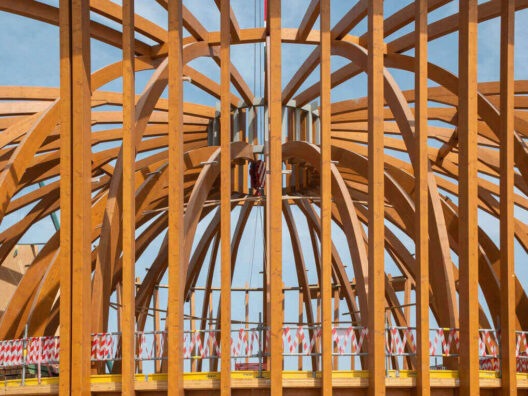
Although the Dubai World Expo, originally scheduled to open in October 2020, has been postponed to October 2021 due to the coronavirus pandemic, works on the Hungarian Pavilion have not slowed down and are progressing according to plan, according to a statement by the project owner, Expo 2020 Nkft.
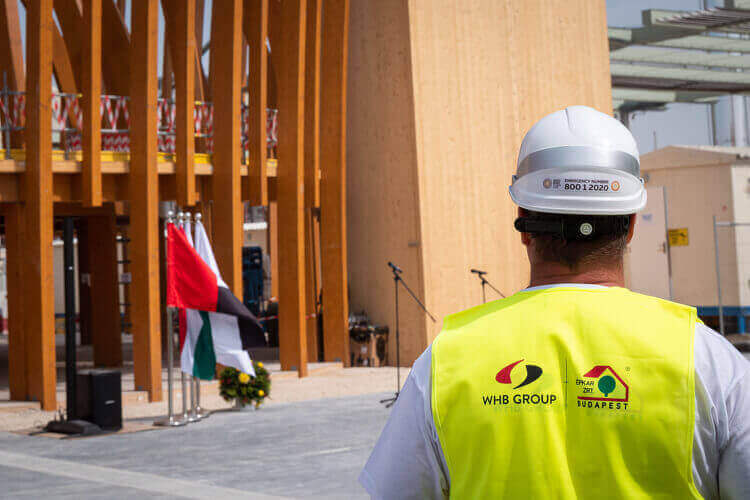
We last reported in February on the construction of the spectacular, organically styled building with its distinctive timber structure, developed by WHB-Épkar Építőipari Zrt., when we provided an on-site report from the topping-out ceremony.

Visual design of the building
Designed by an Ybl Award-winning architect
Interior works are now set to begin on the Hungarian Pavilion, which will offer a total usable floor area of 1,927 square metres. The building is being constructed based on the designs of Ybl Award-winning architect Lőrinc Csernyus, a student of Imre Makovecz.
Once the occupancy permit has been obtained, the building will be securely closed so that it can welcome visitors smoothly next autumn. The postponement does not require any additional funding, as Expo 2020 Magyarország Nonprofit Kft., the organisation responsible for Hungary’s participation, will reschedule the original costs.
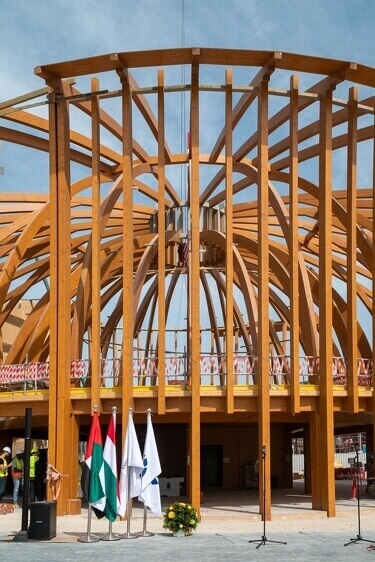
The February topping-out ceremony
According to experts, the multi-storey, double-layered timber-structure building, which also includes an inner dome, could become one of the most distinctive buildings of the Dubai World Expo.
Built without water, yet dedicated to showcasing water
One of the most interesting aspects of the construction process is that the building is being built using dry construction technology, meaning that the contractors do not use any technologies requiring water during construction.
The structural elements of the building were transported to the Dubai World Expo site in three phases in autumn 2019, partly by sea and partly by one of the world’s largest cargo aircraft.
The transportation itself required special procedures, as the structural elements weighed more than 560,000 kilograms in total. The longest element measured 18.47 metres, while the heaviest weighed more than 2,700 kilograms.
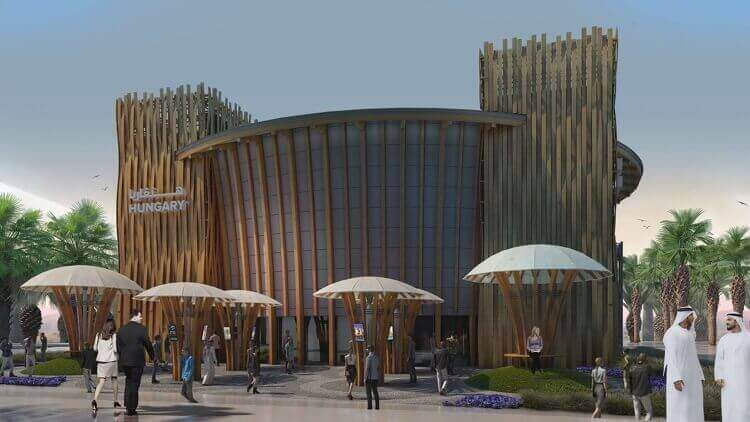
Visual design of the building
Water is at the heart of Hungary’s presence, with the pavilion serving as the “House of Water” in the desert. The exhibition hosted inside the building will introduce visitors to Hungary’s unique thermal and medicinal water resources, as well as the tourism destinations connected to them.
Visitors to the pavilion will also have the opportunity to discover Hungarian gastronomy, sample Hungarian mineral waters, and explore Hungarian artisanal products.
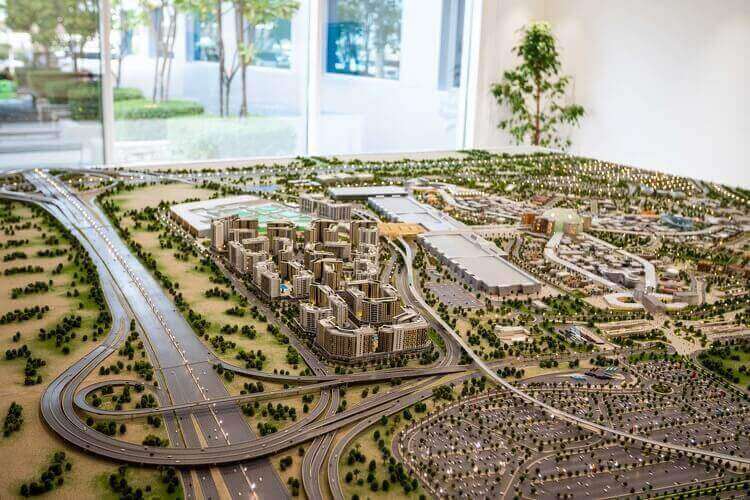
Model of the Dubai World Expo