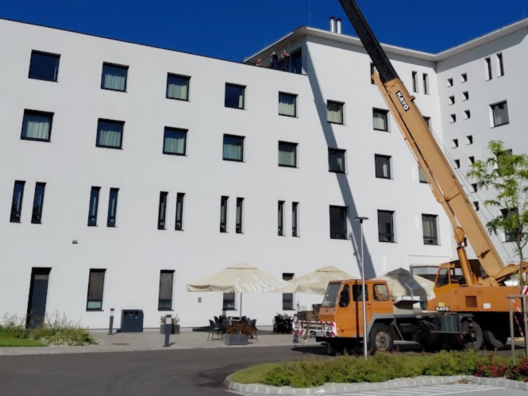
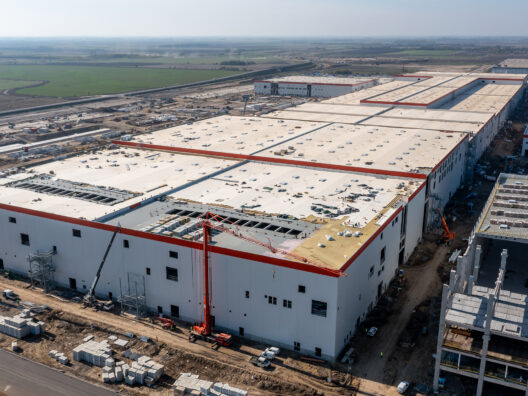
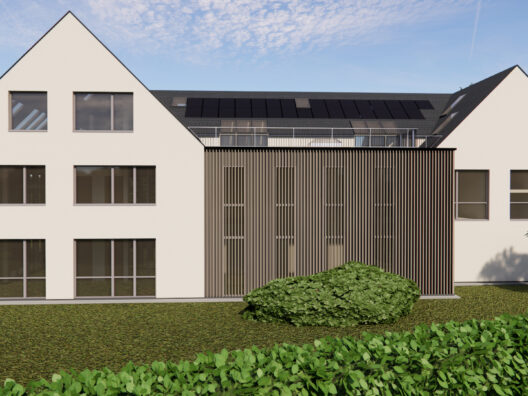
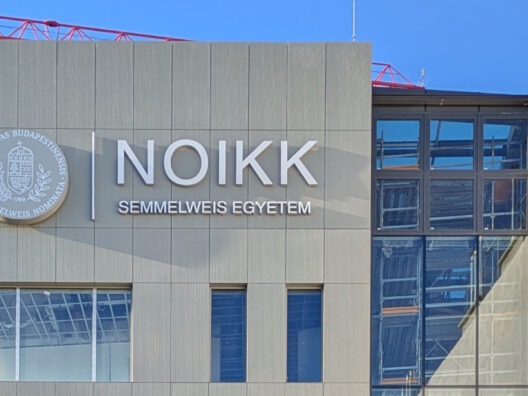
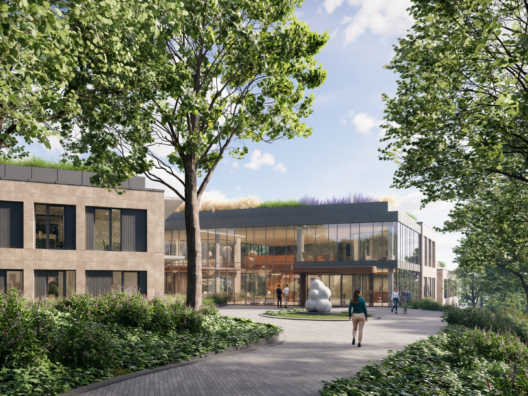
The completion of the Research and Development Center and Campus represents one of the region’s most significant investments in education and innovation, creating a high-quality research environment, modern educational spaces, and an engineering competence center. The general contractor for the project was WEST HUNGÁRIA BAU Kft., which provided state-of-the-art, sustainable, and long-term operational solutions to complex technical and organizational challenges.
Basic Data
Function: Research center, innovation labs, educational and campus facilities
Total floor area: ~ 8,000 m²
Location: Kőszeg
Project type: Full-scope general contracting
Construction period: 2021–
Technical complexity: high – laboratories, mechanical systems, specialized layer sequences
WHB’s construction tasks and technical scope
1. Structural engineering – precise technical solutions tailored to laboratory functions
Unlike the sports and laboratory buildings, the research center required special structural requirements, which WHB met with the following solutions:
vibration-isolated floor structures for precision instruments
high-load-bearing reinforced concrete wall structures
floors with low deformation values required for laboratories
design of acoustically separated research rooms
coordinated construction of a multi-story, complex building complex
2. Modern mechanical and electrical infrastructure – state-of-the-art design
To support the research institute’s functions, WHB has developed a specialized mechanical and electrical network featuring advanced technical specifications:
Mechanical Engineering:
high-performance ventilation systems with HEPA filtration for laboratories
rooms with controlled pressure differentials
research areas with stabilized humidity and temperature
basic building services with heat pumps
energy-efficient cooling and heating zones
Electrical Systems:
state-of-the-art IT infrastructure with a fiber-optic network
transformer stations and redundant power supply
dedicated, stable electrical circuits for research instruments
LED lighting with smart control and remote monitoring
This technical standard enables the Campus to meet international standards for research and innovation facilities.
3. Interior Design – Harmonizing Educational and Innovation Functions
The design of the interior spaces required special attention, as multiple functions had to be integrated into a single complex:
high-ceilinged, flexibly configurable educational spaces
research offices and meeting rooms with acoustic partitions
laboratories with specialized flooring systems (antistatic, chemical-resistant surfaces)
ergonomic communal spaces
student campus amenities: lounge, study pods, coffee stations
WHB emphasized a modern, minimalist design aesthetic typical of research institutions—featuring natural light, glass walls, and cost-effective finishes.
4. Development of the Outdoor Environment and Infrastructure
As part of the project, WHB fully implemented:
utility connections
parking lots, walkways, and green spaces
outdoor lighting
connections between campus zones
bicycle infrastructure and outdoor recreational areas
Sustainability was a key focus in the campus design—through the use of shade structures, landscaping, and water management solutions.
5. Special Technical and Engineering Challenges
Vibration- and noise-free research environment
WHB employed vibration-damping layer configurations and floor structure solutions suitable for the operation of laboratory instruments, microscopes, and precision measuring devices.
Building physics solutions tailored to laboratory functions
wall and floor junctions ensuring sterility
chemical-resistant surfaces
special ventilation units
controlled air exchange rate
Sustainability solutions
Energy-efficient HVAC heat recovery units
Roof structure prepared for solar panel expansion
Geothermal heat pump system (with expansion potential)
State-of-the-art thermal insulation joints
Significance of the project
Today, the campus is an educational and research center that:
supports scientific and technical innovation in the long term,
serves as a driver of regional development,
provides a high-quality laboratory and engineering environment,
and directly contributes to strengthening university-industry partnerships.
The construction of the WHB ensures that the facility will continue to function as a modern, energy-efficient, and research-friendly environment for decades to come.