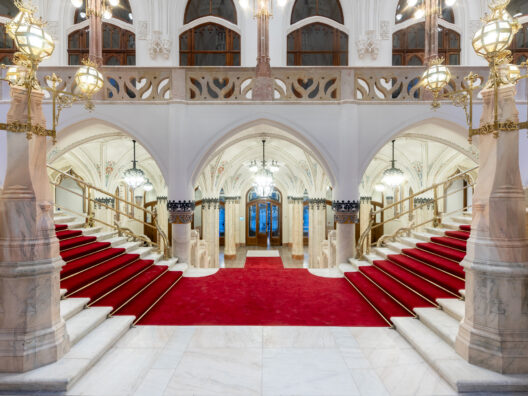
The Stöckl Staircase project presented a unique challenge for us, as it was not merely a simple renovation but a historically accurate reconstruction. Our task was to restore the staircase’s entire structure based on the original plans, while also meeting modern building codes. Preserving the historical value of the monument was a primary consideration throughout the project, so every intervention was preceded by careful research. During the excavation of the staircase’s structure, period details came to light that we had to document, and as a result, we were able to preserve numerous small, previously unknown features. We reused some of the original stones, but replaced the missing elements with special, handcrafted replicas.
During the work, we also found that certain machines could not be used due to the limited space available on the surrounding terrain, so transportation and material handling had to be carried out partly by hand. The foundation of the old staircase had shifted over the centuries, so structural reinforcement was also necessary; for this, we used modern materials and technologies, but in such a way that the end result remains invisible from the outside. In some places, we installed hidden steel reinforcements to ensure the staircase’s long-term stability. A particular challenge was the constant foot traffic in the staircase’s surroundings, as Buda Castle is a major tourist destination, so work processes had to be adapted to a strict schedule. We minimized dust and noise pollution, while also accommodating the timing of cultural events. We implemented lighting using modern yet understated light sources that highlight the staircase’s historical character while also being energy-efficient and environmentally friendly. Modernizing the drainage system was also part of the project to prevent rainwater from causing further damage to the structure.
We reconstructed the staircase railings using custom wrought-iron elements that meet both the aesthetic and functional requirements of historic preservation regulations. Close collaboration between the technical supervisors and the restorers was essential to ensure that every tiny detail was completed to specification. The handover of each phase was accompanied by strict quality control to ensure the staircase meets the requirements for long-term use. We ordered numerous special materials for the project, such as specially weather-resistant stone cladding that matches the castle’s other structures. Throughout construction, we maintained constant communication with the historic preservation authorities to ensure that every intervention was documented and justified. In the final phase, we also landscaped the area surrounding the staircase, creating new green spaces so that the staircase would blend harmoniously into the castle district’s landscape. Throughout the project, we paid special attention to ensuring that the staircase is safe for everyone to use, so we applied anti-slip treatments using modern technologies. We concealed the wiring for the lighting fixtures so that technical details would not detract from the view.