Building Strategic Infrastructure – When More Is at Stake Than Construction Alone
Some investments carry significance that extends far beyond the buildings or facilities they deliver. An energy infrastructure development, an industrial facility, a healthcare institution, or an educational establishment is more than just another addition to the built environment. Its operation can have a lasting impact on a region’s economy, the reliability of essential services, job creation, and even a country’s overall competitiveness.
Projects of such strategic importance demand a different level of expertise and preparedness from construction contractors.
A New Level of Complexity
In strategic infrastructure projects, technical excellence is a fundamental requirement, but it alone does not guarantee success. Contractors must simultaneously comply with stringent safety, quality management, and documentation requirements, as well as, in many cases, industry-specific regulations and standards.
In projects of this nature, every process must be auditable and traceable. Responsibilities must be clearly defined, project activities and deliverables properly documented, and control mechanisms established to identify potential risks before they develop into actual problems. As a result, organisational readiness is becoming just as important as technical expertise.
A key consideration is whether a company can operate effectively within complex project structures, manage information appropriately, coordinate the various engineering and construction disciplines, and consistently comply with client requirements and applicable legislation.
Compliance Is More Than Administration
Specialist qualifications and certified management systems can easily be viewed as merely another aspect of corporate administration. In the context of strategic infrastructure projects, however, they are a reflection of an organisation’s operational culture.
WHB’s nearly 30 years of operations are underpinned by standards covering quality management, information security, anti-bribery management, and supply chain security. The company’s internal ESG documentation also identifies NATO supplier status and compliance credentials relating to activities in the nuclear industry.
These credentials are not simply corporate achievements in their own right. They demonstrate the organisation’s ability to operate through controlled, well-established processes, even under stringent security and technical requirements.
Long-Term Responsibility
In strategic infrastructure projects, a contractor’s responsibility does not end when construction is completed. The quality of delivery can continue to influence operational safety, maintainability, and operating costs for years or even decades to come.
It is not enough to optimise a project solely for the point of handover. During construction, consideration must also be given to how the facility will operate, how it can be maintained and upgraded in the future, and what risks may arise throughout its lifecycle.
Building strategic infrastructure is therefore fundamentally a matter of trust. It requires a partner that not only delivers technical excellence but also understands the broader economic and societal significance of the project.
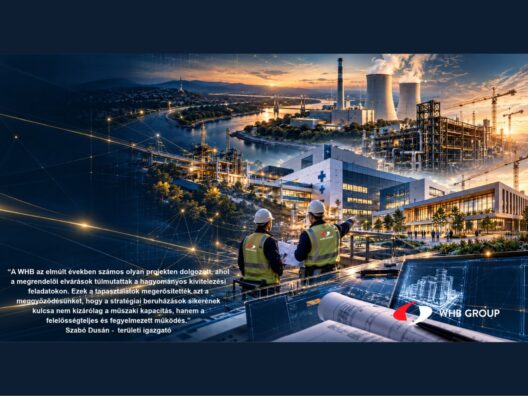
“In strategic infrastructure projects, performing well during the most visible stages of construction is simply not enough. The underlying processes, decisions, and documentation must be equally reliable. In this environment, preparedness is not a promise; it is an operational capability that must be demonstrated every single day.”
Dusán Szabó – Regional Director