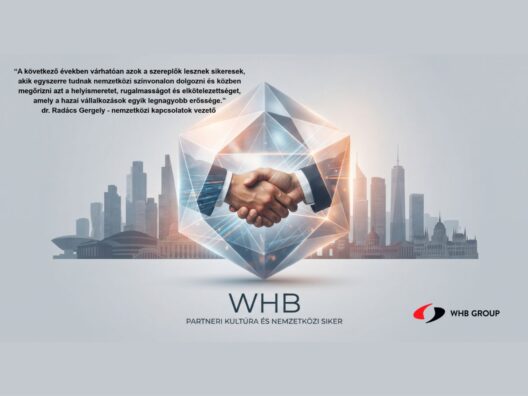
Hungarian-Owned, Internationally Competitive – Competitiveness Is Not Defined by Headquarters Location
In the global investment market, companies are evaluated not by their country of origin, but by their performance. For international clients, the true differentiators are technical expertise, reliability, well-documented processes, responsiveness, and a collaborative approach to business partnerships.
Hungarian ownership, therefore, is neither an advantage nor a disadvantage in itself. It becomes a competitive asset when local market knowledge, flexibility in decision-making, and engineering expertise are combined with operational practices that meet international standards.
International Standards, Strong Local Expertise
A thorough understanding of the local environment plays a crucial role in industrial and institutional construction projects implemented in Hungary. The regulatory framework, supplier market, availability of specialist subcontractors, and permitting procedures all have a significant impact on project delivery.
However, local expertise only becomes a genuine competitive advantage when supported by professional project management. International investors seek partners capable of ensuring transparency in their operations, identifying and communicating risks at an early stage, and fostering effective collaboration across different business cultures.
At WHB, particular emphasis is placed on international project experience, multilingual professionals, internal knowledge sharing, and the application of digital technologies.
Competitiveness Is an Organisational Capability
Delivering to international standards is not about successfully completing a single outstanding project. Rather, it is about a company’s ability to consistently deliver high-quality results across a wide range of project environments.
Achieving this requires a strong professional team, well-documented processes, openness to technological innovation, a reliable network of partners, and a commitment to continuous learning.
Cultural awareness is equally important. Working with international investors involves more than overcoming language barriers. It also requires an understanding of different approaches to decision-making, communication, and project management.
WHB’s corporate communications also emphasise the importance of digitalisation, continuous improvement of internal processes, knowledge transfer between generations, and adaptability to evolving market requirements.
Hungarian Expertise Thrives Through Openness
The strength of Hungarian engineering expertise does not lie in relying exclusively on established domestic practices. Its true competitive potential emerges when it embraces international experience, advanced technologies, and globally recognised operational standards.
Such openness does not mean compromising corporate identity. On the contrary, local knowledge, flexibility, and agile decision-making can provide significant competitive advantages, particularly for investors seeking reliable, long-term partners in Hungary.
Risk Assessment and Project Evaluation
Rigorous, structured project evaluation is particularly critical for capital-intensive projects and developments with extended delivery timelines. This requires a comprehensive, forward-looking approach that goes beyond conventional project planning.
Companies must be able to identify, assess, and anticipate the financial and contractual risks that may affect construction costs, development budgets, and overall project viability.
Today’s constantly evolving global environment brings continuous changes to market conditions, heavily influenced by political developments and economic policy decisions. Consequently, risk management cannot be limited to preliminary assessments conducted before project commencement.
Effective risk management requires continuous monitoring and reassessment throughout the project lifecycle, followed by thorough post-project evaluations. Analysing actual financial returns, comparing outcomes against initial expectations, and incorporating lessons learned are essential to improving future performance and investment decisions.
This approach also requires an in-depth understanding of domestic and international tax regimes, economic policies, and key construction industry stakeholders. A comprehensive perspective on emerging market trends, industry dynamics, and recurring investment patterns is equally essential.
From the perspective of shareholders and senior decision-makers, a fundamental expectation is to embed a proactive, forward-thinking mindset into everyday operations — one that consistently asks: “Have we considered this scenario as well?”
This anticipatory approach enables organisations to identify potential challenges before they materialise, strengthen decision-making processes, and safeguard long-term project value.
Beyond Execution: Acting as a Strategic Professional Partner
In international investor relationships, the greatest value is created by companies that go beyond simply executing assigned tasks and instead act as trusted professional partners.
This involves proactively identifying and communicating risks, presenting viable alternatives, explaining the opportunities and constraints arising from local market conditions, and consistently safeguarding the investor’s objectives throughout the project lifecycle.
“International excellence is not defined by geography. It is the result of professional culture, consistency, openness, and continuous improvement.”
Gergely Radács Head of International Relations WHB Group